
Trading activity of foreign investors and global trends will be the major driving factors for the equity markets in a holiday-shortened week ahead, according to analysts. Leading stock exchanges BSE and NSE have declared a trading holiday on November 20 for assembly elections in Maharashtra. Elections to the 288-member state legislative assembly will be held on November 20, and votes will be counted on November 23.

The interplay between domestic and foreign capital will shape India's equity markets.

From the 30 blue-chip pack, Tata Motors, Titan, Tata Steel, State Bank of India, Mahindra & Mahindra, NTPC, ICICI Bank, Maruti, HDFC Bank and Infosys were among the biggest laggards. Zomato, Tech Mahindra, HCL Tech and IndusInd Bank were among the gainers.

Falling for the fifth day in a row on Monday, equity benchmark BSE Sensex tumbled over 1 per cent to drop below the crucial 75,000 level, tracking a US market trend and unabated foreign fund outflows amid concerns over US tariffs. The 30-share BSE benchmark tanked 856.65 points or 1.14 per cent to settle at 74,454.41. During the day, it plummeted 923.62 points or 1.22 per cent to 74,387.44.

It is not yet clear if Diageo Plc is looking to sell its complete stake in RCB.

Tamil Nadu Chief Minister M K Stalin on Sunday admitted that 'as of now, some assurances such as getting NEET scrapped', could not be fulfilled.

The US Fed interest rate decision, global trends, tariff-related developments and trading activity of foreign investors will drive the equity market movement this week, analysts said. Among macroeconomic data announcement, WPI inflation for February is scheduled to be announced on Monday.

Among Sensex firms, Eternal, Infosys, Asian Paints, HDFC Bank, Bajaj Finserv and Titan were the major gainers. However, Tata Steel, Tech Mahindra, Adani Ports and Bharat Electronics were among the laggards.

Among Sensex firms, Tata Motors, Bharti Airtel, Bajaj Finance, Maruti, Bajaj Finserv, ICICI Bank, HDFC Bank and Reliance Industries were the major gainers. However, Hindustan Unilever, UltraTech Cement, Bharat Electronics and ITC were among the laggards.

From the Sensex firms, Infosys, Tata Consultancy Services, HCL Tech, Tech Mahindra, Tata Motors, Sun Pharma, Maruti and Titan were among the major gainers. Bharat Electronics, Asian Paints, Bharti Airtel and ICICI Bank were among the laggards.

From the Sensex firms, Trent, Tech Mahindra, Bajaj Finserv, Reliance Industries, Infosys, Kotak Mahindra Bank, HCL Technologies, and NTPC were among the biggest laggards. However, Eternal, Tata Motors, Sun Pharma, Tata Steel, and Titan were the gainers.

From the Sensex pack, Bajaj Finserv, Mahindra & Mahindra, Axis Bank, Bajaj Finance, Adani Ports, ICICI Bank, Zomato and UltraTech Cement were among the biggest gainers. However, ITC, Nestle, State Bank of India, Reliance Industries, Asian Paints and Tata Consultancy Services were among the laggards.

The combined market capitalisation of the country's top five IT firms that are part of the BSE Sensex is down 24 per cent since January and their valuation has slipped to lowest levels in the past five years.

Global trends, macroeconomic announcements and US tariff developments are expected to drive stock markets in a holiday-shortened week, analysts said. Market participants will also closely track foreign investor activity, geopolitical tensions, and their impact on the US dollar and crude oil prices, they added.
From the 30-share Sensex pack, Sun Pharma, Reliance Industries, Infosys, Tata Motors, Infosys, Titan, Maruti and NTPC were among the major laggards. Mahindra & Mahindra, Tech Mahindra, HCL Technologies and IndusInd Bank were the gainers.

Maharashtra Deputy Chief Minister Eknath Shinde on Tuesday took a ride in a Tesla car outside the state assembly Vidhan Bhavan in Mumbai, a day after the electric vehicle maker marked its official entry into the Indian market with the launch of its first showroom in Mumbai.

Foreign direct investment (FDI) inflows into India have crossed the $1 trillion milestone in the April 2000-September 2024 period, firmly establishing the country's reputation as a safe and key investment destination globally. According to data from the Department for Promotion of Industry and Internal Trade (DPIIT), the cumulative amount of FDI, including equity, reinvested earnings and other capital, stood at $1,033.40 billion during the said period.

Investors' wealth eroded by a whopping Rs 7.15 lakh crore during the morning trade on Friday as equity markets tumbled, driven by sharp fall in IndusInd Bank shares and unabated foreign fund outflows. The BSE Sensex tanked 708.69 points to 79,356.47 and the NSE Nifty plunged 286.35 points to 24,113.05. Tracking the weak trend in equities, the market capitalisation of BSE-listed firms tumbled Rs 715,739.19 crore to Rs 4,36,63,565.73 crore ($5.19 trillion) during the morning trade.

The Securities and Exchange Board of India (Sebi) on Monday proposed relaxations for asset management companies (AMCs) to serve pooled non-broad-based funds, giving an opportunity to fund houses to expand their business.
From Sensex shares, Larsen & Toubro, Tata Motors, Hindustan Unilever, Asian Paints, ITC, Power Grid, NTPC and Reliance Industries were the major laggards. Among the gainers, Bajaj Finance jumped over 5 per cent. Mahindra & Mahindra, Bajaj Finserv, Bharti Airtel and Maruti also ended higher.

Among the Sensex firms, Infosys, Tech Mahindra, HCL Technologies, Tata Consultancy Services, Wipro and JSW Steel were the major gainers during the morning deals. Nestle, Bharti Airtel, Axis Bank ITC were among the laggards.

Among Sensex firms, Tata Steel, BEL, Adani Ports, Tata Consultancy Services, Tech Mahindra, Bharti Airtel, HCL Technologies, Trent, Mahindra & Mahindra, Reliance Industries, UltraTech Cement and Larsen & Toubro were the major gainers. However, Power Grid, HDFC Bank, ICICI Bank, Hindustan Unilever were among the laggards.

India's private equity industry is evolving, with local funds securing substantial capital and achieving consistent returns. During a panel discussion at TiEcon Mumbai 2025, industry leaders emphasised growing opportunities in scaling buyouts and expanding domestic investor participation.

Investors will take cues from the December quarter corporate earnings, with blue-chips like Infosys, Reliance Industries scheduled to report their results this week, in addition, inflation data and trading activity of foreign investors will also be crucial in dictating market trends, analysts said.

Among Sensex firms, Mahindra & Mahindra, Tech Mahindra, State Bank of India, Infosys, Adani Ports and ITC were the major gainers. However, Eternal, Sun Pharma, Tata Steel, Tata Motors, Bajaj Finance and Bharat Electronics were among the major laggards.

Sensex sinks 573 pts on global tensions and high crude prices

Quarterly earnings of corporates, trading activity of foreign investors and inflation data are the key factors that are expected to drive the momentum in the equity markets this week, analysts said.

Equity markets will take cues from the US tariff related developments, global trends and trading activity of foreign investors this week, analysts said.
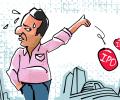
Market watchers link the pullback to underwhelming listing-day performance and the lack of big-name IPOs.

Among the Sensex firms, Sun Pharmaceuticals, Tech Mahindra, HCL Technologies, Infosys, Bajaj Finance, Eternal, Tata Consultancy Services, UltraTech Cement, Bajaj Finserv, Tata Steel, ITC and L&T were the major laggards. Asian Paints, Mahindra & Mahindra, BEL, Adani Ports, State Bank of India, Trent, HDFC Bank were among the gainers.

From the Sensex firms, HCL Tech, Tata Steel, Tech Mahindra, Reliance Industries, Bharat Electronics and ICICI Bank were among the laggards. Bajaj Finance, Hindustan Unilever, UltraTech Cement and Power Grid were among the gainers.
ICICI Bank jumped 2.76 per cent after the company posted a 15.9 per cent jump in its consolidated net profit for the June quarter to Rs 13,558 crore compared to Rs 11,696 crore in the year-ago period. HDFC Bank climbed 2.19 per cent despite the firm reporting a 1.31 per cent decline in its consolidated net profit to Rs 16,258 crore for the June 2025 quarter. Mahindra & Mahindra, Bharat Electronics, Kotak Mahindra Bank and Tata Motors were also among the gainers.

Decision-making has to be much quicker, the finance minister said.
Bharti was talking to Standard Chartered Bank and Citibank, among others, to manage the issue.
Global trends, trading activity of foreign investors and news flow on tariffs are expected to influence movement in the equity market in a holiday-shortened week ahead, analysts said. Equity markets would remain closed on Wednesday for 'Mahashivratri'.

Among Sensex firms, Maruti zoomed the most by 8.94 per cent. Bajaj Finance rallied over 5 per cent, UltraTech Cement by 3.71 per cent, and Bajaj Finserv by 3.7 per cent. Mahindra & Mahindra, Hindustan Unilever and Trent were also among the gainers. However, ITC was the biggest loser, dropping by 1.26 per cent. Eternal, Tech Mahindra and Larsen & Toubro also declined.

Among the Sensex firms, IndusInd Bank, Maruti, Titan, Reliance Industries, NTPC, Mahindra & Mahindra, Larsen & Toubro, Kotak Mahindra Bank and HDFC Bank were the major laggards. UltraTech Cement, JSW Steel, Axis Bank, Tata Consultancy Services, Wipro and ITC were the major gainers.

Trading sentiment in the stock market this week will be guided by quarterly earning announcements from blue-chips such as Infosys and Bajaj Finance, the outcome of India-US trade talks and global cues, analysts said. Markets may on Monday react to the quarterly results of three heavyweights - Reliance Industries, HDFC Bank and ICICI Bank, an expert said.

Market regulator Securities and Exchange Board of India has said one FPI can hold a maximum of 10 per cent of a company's equity shares, while existing overseas investor classes such as foreign institutional investors, sub-accounts and qualified foreign investors need to convert to the new FPI regime eventually.

The Securities and Exchange Board of India (Sebi) on Wednesday announced a slew of measures to ease the compliance burden in the stock markets ecosystem, encourage more companies to list on the bourses after reverse flipping to India, and facilitate greater foreign fund flows into government bonds.
